Google or Meta Ads? Start With the Customer, Not the Platform

Joel Snyder • September 11, 2026

“Should we run Google Ads or Meta Ads?”


The temptation with paid advertising is to start with the platform. Businesses compare costs, audiences, targeting options, click-through rates, and conversion numbers, then try to decide where their budget will perform best.


But advertising doesn't begin with a platform. It begins with a person, more specifically, with understanding what that person is thinking when they encounter your business. 


Before deciding where to spend, a business needs to understand what it is trying to accomplish.

  • Are you trying to reach people who are already looking?
  • Are you trying to make people aware of a problem?
  • Are you introducing something new?
  • Are you trying to stay in front of people who have already visited your website?
  • Are you trying to generate immediate leads, or are you building familiarity that will influence a decision later?


Those answers should influence the platform, the message, the audience, the landing page, and the way success is measured.


The platform comes after the strategy. 


Consider someone who searches Google for “estate planning attorney near me.” They already have a reason to search. Maybe they recently had a child. Maybe their parents are getting older. Maybe they've realized they don't have a plan in place. Whatever prompted the search, the need exists before the advertisement appears. Google gives a business the opportunity to meet that existing demand.


Now consider someone scrolling through Instagram who sees a message about what can happen to a family when someone dies without a proper estate plan. They weren't looking for an attorney. They weren't comparing firms. They may not have even thought about estate planning that day, but the message gets their attention. That's a different kind of opportunity, and it's one of the fundamental differences between Google and Meta advertising: Google can put your business in front of someone who is actively looking for an answer. Meta can put an idea in front of someone before they've decided they need an answer.


That distinction matters because businesses sometimes evaluate advertising as though every campaign should produce an immediate conversion. If a person clicks an ad, fills out a form, and becomes a customer, the campaign looks successful. If they don't, the campaign can look like a waste of money. Real customer behavior is not that clean.


Someone might discover a company through Instagram and think nothing of it. Three days later, they might search the company's name on Google. They may visit the website, read a few reviews, leave, and come back a week later after seeing another ad. Eventually, they make contact.


Was that a Meta lead? A Google lead? A website lead? 


The answer depends on which part of the journey you're measuring.


This is one reason paid advertising can become misleading when the conversation focuses too heavily on individual metrics. A low cost per click doesn't automatically make a campaign valuable. A high click-through rate doesn't mean people are becoming customers. And a platform that appears expensive on the surface may be contributing to a much larger customer journey.


For some businesses, there is already a strong amount of demand. People know what they need, they know what to search for, and they're actively comparing their options. A local service provider, professional practice, or specialized B2B company may benefit greatly from appearing when that search happens. For other businesses, the challenge comes earlier. The audience may not know the company exists. They may not recognize the problem yet. They may not understand the service or product. Or perhaps they know they have a problem but haven't started looking for a solution.


In those situations, waiting for someone to search can mean waiting for demand that hasn't developed yet. This is where Meta can become particularly useful.


It gives businesses an opportunity to introduce a problem, tell a story, demonstrate a possibility, build familiarity, and stay connected with people who have already shown some interest. It can move someone from “I've never thought about that” to “Maybe I should look into this.” And that can eventually lead to a Google search.


This is why the Google-versus-Meta conversation isn't always a competition between two platforms. Sometimes they're two parts of the same strategy.


One creates awareness. Another captures intent. Retargeting keeps the conversation going. The website provides information and builds trust. Reviews help reduce uncertainty. A strong offer gives someone a reason to take the next step.


But the strategy doesn't stop once the campaign goes live. Don't just set it and forget it. Track what happens after the click, pay attention to which messages and audiences are actually moving people forward, and use those insights to keep improving the campaign. Customer behavior changes, results change, and what works today may not work the same way tomorrow. The strongest paid advertising strategies aren't built around choosing the perfect platform once; they're built around watching, learning, and adjusting as the customer journey unfolds. 

Representation of how the right business tools and AI work together to create efficient systems.h
By Joel Snyder August 7, 2026
Discover why business growth depends on using the right tools for the right purpose. Learn how AI, SEO, websites, and marketing work best as a complete system.
Business professional analyzing Google Ads data to improve SEO, keyword research, and organic search
By Joel Snyder June 28, 2026
Learn how Google Ads can support SEO by revealing valuable keyword data, testing messaging, and improving landing pages without buying organic rankings.
Professional analyzing market research and marketing strategy while using AI tools
By Joel Snyder May 29, 2026
AI can generate content, but it cannot replace market research, positioning, or strategic thinking that drives real business growth.
Person holding a chalkboard with an upward trend graph and dollar signs.
By Joel Snyder March 10, 2026
Understand the difference between attribution, ROAS, and ROI and how these key metrics help businesses measure marketing performance and profitability.
Smiling business team with crossed arms in the office.
By Joel Snyder February 11, 2026
Discover how a Fractional CMO provides executive level marketing strategy, drives scalable growth, and delivers results without the cost of a full time hire.
Laptop displaying video, with icons for sharing, likes, and targeted marketing. Blue background.
By Joel Snyder January 13, 2026
Most businesses start with the same assumption: if the product is good enough, people will eventually find it. Outreach shows intentional conversations spark growth.
Woman using laptop, holding glowing
By Joel Snyder September 2, 2025
Digital Marketers have heard the same rumor for years: “SEO is dead.” We believe the opposite: SEO isn’t dead, it’s expanding.
By Joel Snyder July 8, 2025
In marketing, attention isn’t just currency—it’s the gatekeeper of every conversion. Yet, in a landscape overloaded with messages, ads, and calls to action, it’s no longer enough to capture interest. You need to remove barriers to action entirely. That’s where Zero and One-Click Marketing come in. These are not gimmicks, they’re strategies designed for how people make decisions today: quickly, impulsively, and often on mobile. When applied correctly, they streamline user behavior; they reshape the customer experience, delivering efficiency without sacrificing depth . In this article, we unpack how these strategies work, where they fit in a larger digital ecosystem, and how businesses of all sizes can implement them with precision. What Is One-Click Marketing? One-click marketing refers to designing pathways that allow users to take a desired action, such as making a purchase, scheduling a call, or downloading a resource, with minimal effort , ideally with a single interaction. This strategy is rooted in behavioral psychology: the fewer steps a user takes, the more likely they are to follow through. This strategy is rooted in behavioral psychology: the fewer steps a user takes, the more likely they are to follow through. Common Applications "Buy Now" buttons that bypass the cart and go straight to checkout Email CTAs that lead directly to pre-filled landing pages or forms Retargeting ads with personalized offers and instant conversion paths Why It Works? Reduces drop-off due to decision fatigue or friction Increases conversions by shortening the customer journey Creates a smoother, more intuitive user experience When implemented thoughtfully, one-click strategies enhance user satisfaction and drive performance without sacrificing brand integrity. What Is Zero-Click Marketing? While one-click strategies aim to simplify action, zero-click marketing focuses on delivering value instantly, without requiring any clicks. The goal is to provide helpful, relevant information within the platform where the user is already consuming content. You’ve Seen It In: Google Featured Snippets : Deliver concise answers directly within the search results, allowing users to access key information, such as business details or frequently asked questions, without visiting the website. Social media carousels or infographics : No click needed to understand the message Email previews : key value delivered in the subject line or preheader Strategic Value: Positions your brand as helpful and authoritative Builds trust before asking for action Keeps you visible and relevant, even when users don’t engage directly Zero-click content is part of a long-game approach: Educate and engage first, convert later. Why These Strategies Matter Every extra click or barrier can cost you a conversion in a world where users are constantly multitasking. The businesses that succeed are those that make interaction easy, thoughtful, and intuitive.
By Mai Raffiñan June 3, 2025
Let’s begin with an uncomfortable truth: most marketing today is forgettable. Despite access to better tools, smarter data, and endless content, many brands struggle to make lasting impressions. Why? They focus on logic when emotion drives behavior. At Coax, we believe marketing should do more than inform. It should connect. And that connection starts with understanding the emotional architecture behind decision-making. In this article, we’ll walk through 7 principles drawn directly from our client strategy sessions and Brand Brief methodology —all rooted in emotional science and proven to elevate your brand’s impact. 1. Emotion Is a Strategy—Not a Side Effect High-performing brands aren’t successful by accident. They follow emotional formulas that bypass rational thinking and speak directly to what drives action: feeling. You see it in every industry—from luxury retail to tech startups. The most resonant campaigns don’t rely on data dumps or lists of features. They center on how the brand makes you feel. Confidence, nostalgia, urgency, or belonging, emotion is not just an ingredient in effective marketing. It is the foundation. If your brand isn’t resonating, it’s not due to a lack of facts—it’s a lack of feeling. 2. Your Brand Archetype Is the Starting Point Every successful brand has an identity beneath the surface—an emotional blueprint that shapes communication and connection. This is your Brand Archetype , revealing the emotional triggers guiding your tone, language, messaging, and offers. Whether you’re a visionary, nurturer, explorer, or protector, understanding your archetype allows you to build strategy with precision instead of guesswork. Clarity begins with identity. Know who you are emotionally before you try to connect with others. 3. Don’t Overload. Focus on One Emotion at a Time. The brain processes only one conscious emotion at a time. Yet many brands try to communicate too much at once—cramming every feature, offer, and value prop into a single ad or landing page. This creates confusion, not connection. High-converting campaigns are focused and deliberate. They convey one message, one emotional driver, and one clear reason to act. Don’t ask your audience to multitask. Anchor your messaging in a single, intentional emotion. 4. Word-of-Mouth is Not a Marketing Plan Referrals are great, but not scalable, predictable, or controllable. If your brand relies solely on organic buzz to grow, you’re operating on luck, not leverage. Instead, top-performing brands repeat their message with clarity and consistency across paid, If you’re not in control of your message, someone else is—and they might not get it right. 5. Boring Products Don’t Exist—Only Boring Messaging Milk, razors, and pistachios aren’t inherently exciting products, yet each has been the center of multimillion-dollar campaigns. The difference? Symbolic storytelling. When Dollar Shave Club launched with a $4,500 video, it didn’t discuss blade quality—it delivered humor, rebellion, and convenience. The result? Over 12,000 customers in 48 hours and a billion-dollar exit. You don’t need a revolutionary product. You need a narrative that taps into existing emotional needs. 6. Visuals Drive First Impressions—and First Reactions Research shows we process visuals 60,000 times faster than text. That means your audience is evaluating your brand before they read a word. Effective design isn’t about decoration. It’s about alignment. Your visuals must reinforce the emotional tone of your message—or they’ll dilute it. If your imagery doesn’t support your message emotionally, it works against you. 7. The Right Words Are More Than Persuasive—They’re Precision Tools There are hundreds of “power words” out there. However, the correct words for your brand depend on your audience and archetype. That’s why we build custom Persuasion Libraries for clients—sets of emotionally charged language matched to their unique strategy. These words aren’t chosen at random. They’re engineered to prompt action. Language is your most scalable sales tool. Choose it strategically, not generically. Strategy That Connects is Strategy That Converts We’ve seen brands transform when they shift from performance-driven messaging to emotionally grounded storytelling. Because in the end, it’s not about saying more—it’s about saying what matters. You don't need more content if your marketing feels stuck, scattered, or forgettable. You need emotional clarity, and we can help you achieve it. Ready to stop guessing and start resonating? We turn emotional insight into brand impact. Discover your archetype, clarify your message, and move your market. Book your free strategy session and build a brand that people don’t just see but feel .
By Joel Snyder May 13, 2025
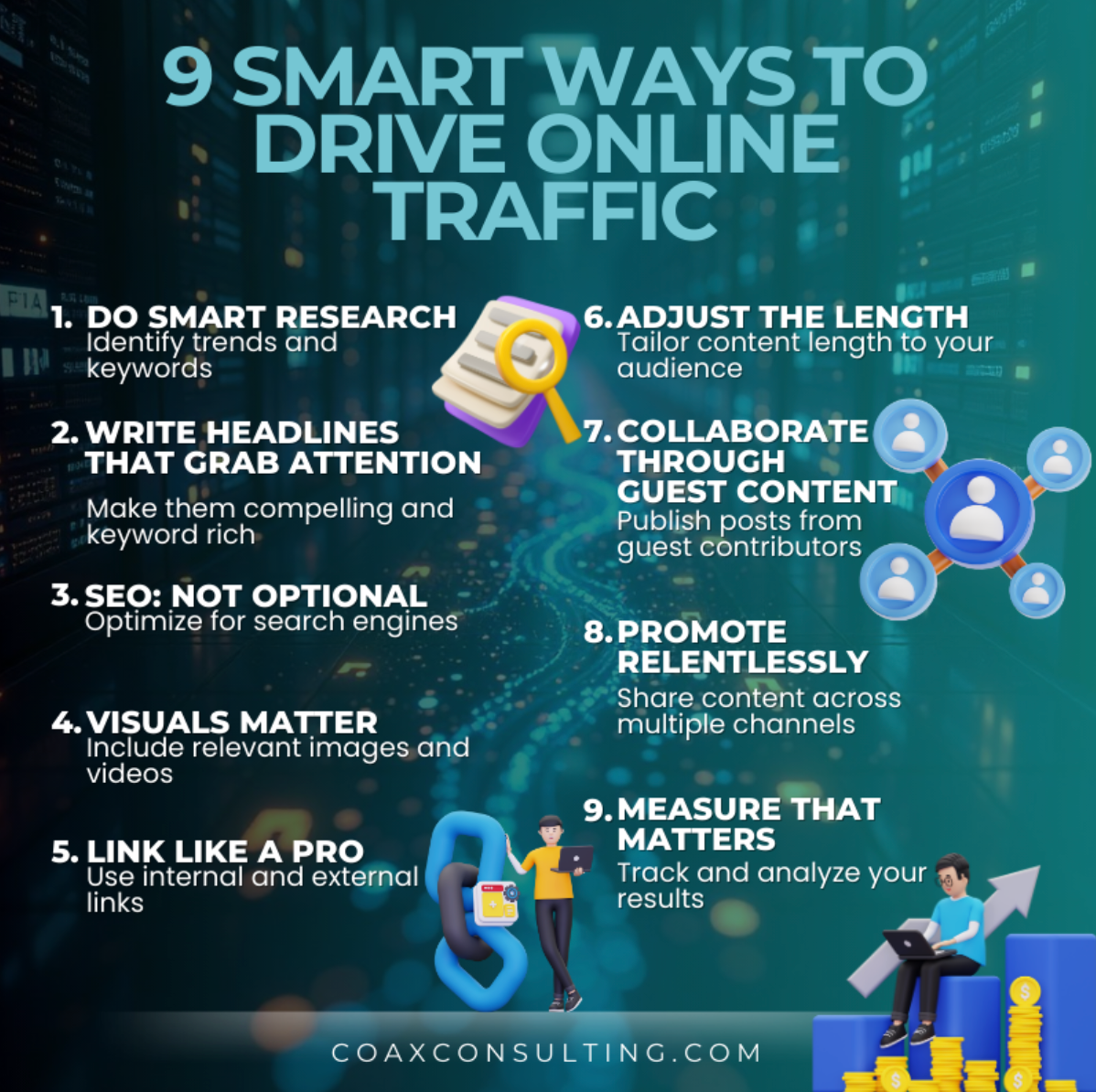
You’re publishing content. You’re spending on ads. You’re showing up online. But if your traffic isn’t converting—or if no one’s even showing up—it’s time to rethink the game plan. This guide explains online traffic, why it matters, and how to optimize it. It does not contain jargon or fluff—just actionable insight. First, What Is Online Traffic? Online traffic is the flow of visitors to your digital content—blogs, videos, landing pages, e-commerce sites, and more. But not all traffic is good traffic. Organic traffic = Real humans finding you through search engines and engaging with your content. This is gold. Bot traffic = Automated visits from non-human sources. It might inflate your numbers, but it will tank your SEO and skew your analytics. Pro Tip: Google knows the difference. Prioritize human engagement. Why Traffic Alone Doesn’t Cut It Anymore Five years ago, traffic numbers were king. Today? It's about what people do after they land . Key metrics that matter now: Time on page — Are they reading, watching, or just bouncing? Conversion rate — Are visits turning into signups, sales, or leads? Engagement — Are users clicking through, sharing, and commenting? Quality > quantity. Always. Let’s Get to Work: 9 Ways to Level Up Your Online Traffic 1. Do Smart Research First Forget guesswork. Use tools like Google Trends , Ubersuggest , or SEMrush to: Identify what your audience is searching for Pinpoint trending, relevant topics Discover keywords with high search volume and low competition Target: Topics people care about, and you’re equipped to own. 2. Write Headlines That Make People Click (and Stay) Your title is your pitch. Make it matter. Bad: “Ways to Improve Your Website” Better: “7 Simple Website Fixes That Could 2X Your Sales in 30 Days” Use active language, add a benefit, and don’t forget your keyword. 3. SEO: Not Optional Search Engine Optimization is your long-term visibility tool. Essential elements: Keyword placement (titles, headers, meta descriptions) Fast-loading pages Mobile-friendly design Alt text for images Clean internal linking Think of SEO as architecture for online growth. 4. Visuals Matter—Don’t Just Rely on Text Content with relevant visuals gets 94% more views . Use: Explainer videos Infographics High-quality images Interactive content (like sliders or polls) The more engaging the layout, the longer people stay. 5. Link Like a Pro (Internally and Externally) Intelligent linking helps in three significant ways: Keeps people on your site longer Improves your SEO structure Builds authority by referencing credible sources Example: Link a term like conversion rate to a detailed guide on your blog. 6. Adjust the Length of the Message Long content isn’t always better. Match the length to the goal: Quick wins & updates = 500–800 words How-to guides & explainers = 1,200–2,000 words Thought leadership = 2,000+ words (if well-executed) Focus on depth and clarity, not word count. 7. Collaborate Through Guest Content Bring in guest writers with an audience. You: Add content without doing all the work Gain access to their followers Strengthen credibility through expert voices 8. Promote Relentlessly (and Strategically) You can’t rely on organic reach alone. Share your content across: Social platforms (with tailored messages for each) Email newsletters Online communities (Reddit, Slack groups, niche forums) Paid ads when budget allows Pro tip: Repurpose one article into 10 social posts. Maximize reach. 9. Measure What Matters — Then Optimize Use Google Analytics , Hotjar , and SEO tools to monitor: Bounce rate Traffic sources User flow Click-through and conversion rates Data tells you where to double down, what to tweak, and what to ditch. Traffic That Converts Starts With Strategy At Coax Marketing, we don’t create noise. We build content and campaigns that get seen, get clicks, and get results . You don’t need more traffic. You need smarter traffic that turns visitors into leads, buyers, and fans. Let’s work together to make your marketing efforts generate Predictable, Profitable, and Scalable results!